

.png) 5 day_ago
24
5 day_ago
24

For the US, this event forces a delicate calculation on whether to support the Ukrainian project of escalation against Iran to explicitly bringing about a multi-front conflict.
Click here to read this article in Spanish/Español.
The recent Ukrainian strike on an Iranian cargo vessel in the Caspian Sea marks a significant and potentially dangerous escalation in the geopolitical landscape, effectively merging the US proxy war in Eastern Europe with the other ongoing US conflict in the Middle East. This attack, which resulted in the death of a crew member and injured another, was quickly confirmed by Ukrainian officials who justified it as a legitimate strike on a vessel used for military logistics between Russia and Iran. Ukrainian President Volodymyr Zelensky explained the attack within a broader narrative of an expanding threat, publicly alleging that Russia is providing crucial satellite intelligence to Iran (which Russia denies). This narrative was leveraged to argue that the conflicts are inextricably linked, with the stated goal of necessitating a unified international response against what was described as an axis of aggressors.
The geopolitical calculations behind Kyiv’s decision are complex, appearing to be a high-stakes gambit aimed at galvanizing its Western allies and pushing the US to make its war against a multipolar transition something more explicit. Some analysts posit that the move was designed to curry favor with the US administration by demonstrating Ukraine’s utility as a more aggressive partner, aligning with a strategy to escalate pressure on Iran and Russia simultaneously. Conversely, Iranian officials have offered a different interpretation, suggesting that the attack was instigated by Israel to draw Europe directly into the Middle Eastern conflict, thereby broadening the war’s front lines. Iran’s official reaction has been one of sharp condemnation, summoning Ukraine’s charge d’affaires and warning that it reserves the right to take “appropriate action” to defend its national interests, with some sources indicating that a retaliatory ballistic missile strike against a strategic target in Ukraine is under serious consideration.
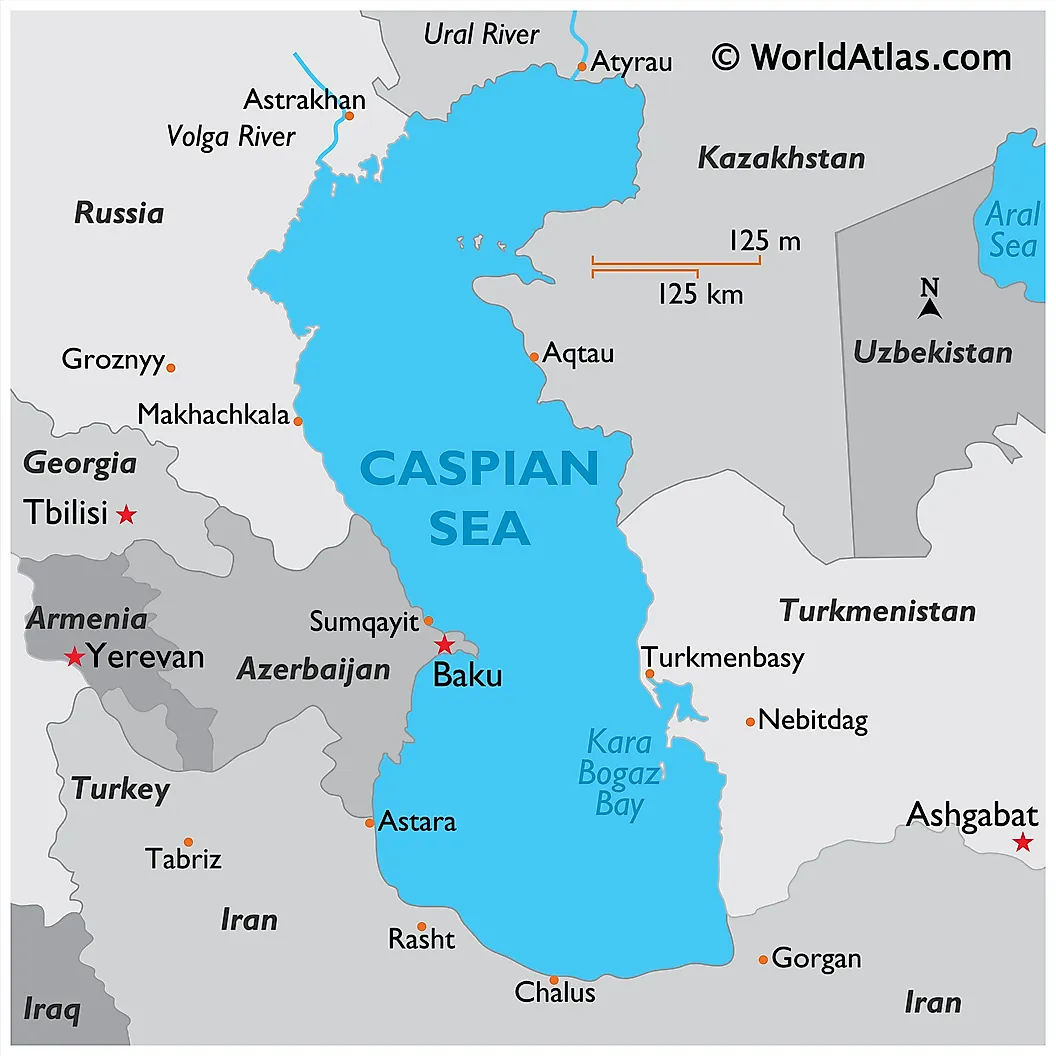
The strategic importance of the Caspian Sea as a new front is paramount to understanding the gravity of this incident. The world’s largest inland body of water has evolved into a critical economic lifeline for Iran, serving as a vital conduit for trade and essential goods that bypass the heavily contested Strait of Hormuz and the Persian Gulf, which are subject to significant geopolitical pressures and US naval blockades. By striking a vessel in this relatively stable region, Ukraine has directly targeted a key node of Iran’s strategic infrastructure, transforming what once were calm waters into an active theatre of operations by violating the security mechanisms that had governed the area. The public stance of the US administration is ambiguous as President Donald Trump has publicly stated his trust in the commitments from both Chinese and Russian leaders that they are not supplying weapons to Iran, a position that appears to distance him and his administration from the allegations of Russian complicity being promoted by Ukraine. However, The US Is Creeping Into The South Caucasus & Central Asia To Contain Russia as you read this, and at the end of the day, the US as main backer of both Ukraine and of Israel, has still not chosen to unite both conflicts as one.
.
.
Thus, Ukraine’s perspective which seemingly contradicts – only explicitly — the views of other US officials that haven’t taken risks creating a chasm within the governing coalition regarding the true nature of the Russia-Iran partnership. The key question emerging from this incident is not just whether Iran will retaliate against Ukraine for a direct attack on its sovereignty and citizens, but how this new dynamic will influence the broader alliance structures and force a reevaluation of strategic commitments. For Kyiv, the gamble may provide a temporary boost in visibility as a frontline state against a perceived common enemy, but it also risks overextending its dwindling military resources. For the US, this event forces a delicate calculation on whether to support the Ukrainian project of escalation against Iran to explicitly bringing about a multi-front conflict.
The Caspian strike represents a deliberate attempt to forge a direct linkage between two distinct theatres of war, compelling the international community to confront an expanded axis of adversaries spanning from Eastern Europe to the Persian Gulf. Iran’s invocation of the UN Charter in its protest and its explicit warning that attacks on its citizens will not go unanswered signal a credible threat of retaliation that could rapidly spiral beyond Ukrainian territory. The response of the United States remains the critical variable, as President Trump’s apparent reluctance to endorse Ukraine’s narrative of Russian complicity suggests a strategic hesitancy to be drawn into a broader confrontation pitting NATO officially against a coalition of Russia, Iran, and potentially China. As once the principle of striking beyond one’s immediate theatre of operations is accepted, the boundaries constraining modern warfare would be replaced by a world war logic of retaliation that knows no geographical limits.
*
Click the share button below to email/forward this article. Follow us on Instagram and X and subscribe to our Telegram Channel. Feel free to repost Global Research articles with proper attribution.
Miguel Santos García is a Puerto Rican writer and political analyst who mainly writes about the geopolitics of neocolonial conflicts and Hybrid Wars within the 4th Industrial Revolution, the ongoing New Cold War and the transition towards multipolarity. Visit his blog here.
He is a Research Associate of the Centre for Research on Globalization (CRG).
Featured image is from the public domain
Global Research is a reader-funded media. We do not accept any funding from corporations or governments. Help us stay afloat. Click the image below to make a one-time or recurring donation.



















.jpg)


 French (CA)