

.png) 3 day_ago
13
3 day_ago
13

The release of the State Department’s report, “Cuba, the Capital of 21st Century Communism,” is a calculated escalation in Washington’s long-standing confrontation with Havana, serving as an ideological manifesto designed to justify a new era of aggressive action.
The document alleges that the Cuban government has waged a sustained campaign of subversion against the United States, involving espionage, the cultivation of American activists, and the construction of a sprawling revolutionary network.
Click here to read this article in Spanish/Español.
The document’s language makes this not a simple intelligence assessment but a performative act of policy justification, providing intellectual legitimacy for actions driven by a strategic agenda to reassert American hegemony.
The timing is significant, as the report arrives amid an unprecedented convergence of US pressure by Trump 2.0 on the island, including a fortified embargo, an energy siege, and the collapse of Cuba’s most critical ally following the apprehension of then president Nicolas Maduro by US forces after a negotiated regime tweak on January 3 of this year.
Alongside the recently released report, the Trump administration has issued a sweeping executive order expanding sanctions against Cuba, including secondary sanctions that target foreign financial institutions and entities operating in the Cuban energy, defense, and mining sectors. The US has also imposed new restrictions on business and travel, including banning individual people-to-people educational travel and prohibiting US citizens from staying at over 80 Cuban hotels designated as benefiting government officials.
At the heart of the report lay allegations that Cuba perfected a new model of warfare based on espionage, sabotage, and proxy networks rather than conventional military might. The document posits that Havana devoted itself to mobilizing a global coalition around a unique form of Marxism built on racial and civilizational grievances against the United States.
The report traces this history from the Fair Play for Cuba Committee and the Tricontinental Conference through the Venceremos Brigade and its influence on American extremist movements, positioning Cuba as the ideological capital of the modern radical left. This narrative constructs Cuba not as a minor state in global affairs but as a force that outlasted Soviet communism by weaponizing Marxist thought and appealing to the oppressed peoples of the Global South and their domestic counterparts in the West.
Image: Assata Shakur
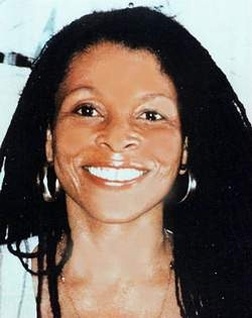
The document’s most controversial argument is that Cuba’s strategic success is visible in movements like Black Lives Matter, tracing a line from Robert F. Williams and Stokely Carmichael to the fugitive Assata Shakur. By positioning American blacks as a colonized people, Cuba helped frame their struggle as part of the global anti-colonial war, a narrative that the report claims now defines black radicalism. This serves a political purpose, suggesting that mainstream leftist organizations are not just opposed to US policy but are “fellow travelers” whose commitments have been exploited by a hostile power.
The report’s mixes truths with lies and exaggerations, detailing of espionage cases serves as its most concrete anchor, which shows the decades-long infiltrations of figures like Victor Manuel Rocha, a former US Ambassador, and Ana Belen Montes, the DIA’s senior Cuba analyst. The document emphasizes that Cuban intelligence relies on “true believers” rather than paid mercenaries, rendering its agents uniquely loyal and inconspicuous. This focus on long-term target development within elite American universities suggests a deep investment in shaping future policymakers. The inclusion of the “Wasp Network” case solidifies the link between espionage, propaganda, and direct action, framing Cuba’s influence operations as a single, integrated project. Beyond spycraft, the report details “revolutionary tourism” and front groups like the Venceremos Brigade, arguing that these networks have infiltrated mainstream institutions, from academia to the Democratic Party itself.
This report arrives at a moment of extraordinary pressure on the Cuban goverment. The fortified embargo under the Trump administration, led by Secretary of State Marco Rubio, has tightened the economic noose, while an energy siege has crippled infrastructure and left the population facing chronic shortages. The fall of Venezuela, following Maduro’s apprehension on January 3, has shattered Havana’s most vital strategic partnership, which for decades provided subsidized oil but with that lifeline gone, Cuba finds itself isolated and economically strangled.
This context is essential for understanding the report’s strategic function as ideological justification for a comprehensive assault on a country Washington believes is now vulnerable. The Trump administration has spoken of “friendly takeovers,” signaling that fundamental political changes on the island are on the table. It builds the case for decisive action, constructing a permission structure for measures ranging from intensified sanctions to more direct interventions. It serves as the intellectual scaffolding for a policy of regime transformation, providing the moral and legal arguments for whatever steps Washington decides to take.
The report contextualizes Cuba within a broader anti-American coalition, pointing to a supposed deepening intelligence partnerships with China and Russia, whose alleged intelligence facilities on the island provide a strategic foothold near the Florida coast. However, the report’s claims about deepening military cooperation with China and Russia don’t seem trustworthy given Cuba’s limited economic integration into the multipolar world, where trade and investment remain modest. The Eurasian powers do not have nearly as much of a foothold in Cuba economically, and even less militarily because despite Cuba’s public rhetorical embrace of multipolarity and its strategic alignments with China and Russia, the island-state is hesitant to integrate into Russia and Chinese economies and remains one of the least integrated nations into the actual economic and institutional architecture of the emerging multipolar world, as the modest levels of trade, investment, and financial support it receives from its nominal partners fall far short of what would be necessary to sustain a functioning economy or to offset the crushing weight of the fortified US embargo and energy siege.
It’s farfetched that Cuba became a military protectorate out of the blue when it has failed to attract and accept multipolar business opportunities beyond its official integration into the BRICSphere.
So clearly the documents exaggerations and fabrications are meant to provide so called “evidence” Cuba’s support for Iran and its proxies, positioning Havana as a supposed node facilitating cooperation between Iranian-backed terrorist groups and leftist militant networks. This further connects the US campaign against Cuba to a broader war against the global transition to multipolarity, targeting the Global South and emergent economies by preemptively inventing or reviving pretexts for conquest.
The report could be used on the one hand as an instrument for Trump’s 2.0 version of the Monroe Doctrine, creating a US sphere of influence in Latin America and on the other hand as an instrument of neo-McCarthyism designed to crush domestic dissent, recycling Cold War tropes and omitting six decades of US aggression, including the devastating blockade. Thus the administration is creating a premise for expanded measures against both Cuba and domestic opponents.
Ultimately, the document is less an objective analysis and more a piece of political warfare that conflates ideology, espionage, and dissent to construct a single existential enemy. By linking past spy cases with a sweeping narrative of ideological influence touching modern social movements, the document seeks to manufacture consent for a more aggressive posture. As the Trump administration 2.0 tightens the screws on Havana, with the fortified embargo, the energy siege, and the collapse of Venezuela’s support all weakening Cuba, this report provides the ideological ammunition for another push toward political change on the island.
So, along with the fortified embargo and secondary sanctions, is explicitly designed to deter foreign financial institutions from engaging with Cuba, creating a chilling effect that would make any significant BRICS-related trade or investment prohibitively risky for international partners. Hence Washington is effectively ensuring that Cuba’s path toward genuine multipolar economic engagement remains obstructed regardless of its political aspirations. And having already successfully economically captured Venezuela and maintained maximum pressure on Iran, the Trump administration appears poised to use the same playbook to push Cuba into a state of chaos, where Cuba is left so economically isolated and desperate that it is forced to make concessions on US terms or face complete collapse.
*
Click the share button below to email/forward this article. Follow us on Instagram and X and subscribe to our Telegram Channel. Feel free to repost Global Research articles with proper attribution.
Miguel Santos García is a Puerto Rican writer and political analyst who mainly writes about the geopolitics of neocolonial conflicts and Hybrid Wars within the 4th Industrial Revolution, the ongoing New Cold War and the transition towards multipolarity. Visit his blog here.
He is a Research Associate of the Centre for Research on Globalization (CRG).
Global Research is a reader-funded media. We do not accept any funding from corporations or governments. Help us stay afloat. Click the image below to make a one-time or recurring donation.













.jpg)


 French (CA)