

.png) 3 week_ago
30
3 week_ago
30

I was born far from Washington.
Far from Wall Street.
Far from Brussels.
Far from the polished rooms where men in suits explain the suffering of others in a language designed not to tremble.
To read this article in the following languages, click the Translate Website button below the author’s name.
Farsi, Hebrew, Русский, 中文, Dutch, Español, عربي, Portugues, Français, Deutsch, Italiano, 日本語, 한국어, Türkçe, Српски. And 40 more languages.
I was born in the Sahara.
In a land where memory walks slowly, but never dies.
There, people learn early what empires spend centuries trying to hide:
When powerful men lie, ordinary people bury the dead.
This article is not written against a nation.
Not against a religion.
Not against a people.
It is written against an idea.
The most dangerous political idea of our century: That some peoples are disposable.
Not officially.
No empire says this plainly.
No president signs a decree saying some children matter less.
No minister stands before cameras and declares that some nations have only conditional humanity.
Yet the world is governed, bombed, sanctioned and deceived as if this were true.
Palestinians are asked to prove their humanity under rubble.
Lebanese civilians are asked to understand why their villages must become messages.
Iranians are discussed as a regime before they are remembered as a people.
Cubans are punished across generations for the crime of refusing obedience.
And always, the same mechanism returns.
First, a people becomes a problem.
Then the problem becomes a threat.
Then the threat becomes an exception.
Then the exception becomes policy.
Then policy becomes death.
Language performs the first act of violence long before the missile arrives.
The bomb merely completes what vocabulary has already begun.
Image: Mohammad Mosaddegh in court, 8 November 1953 (Source: Wikimedia Commons)
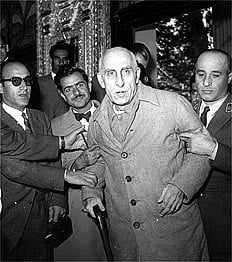
In 1953, Mohammad Mosaddegh committed what empires have often considered the unforgivable crime: he believed Iranian oil belonged to Iranians.
Operation Ajax followed. An elected prime minister was overthrown through a covert operation organized by the CIA and MI6. Decades later, official documents confirmed what Iranians had never forgotten.
The lesson was simple.
Sovereignty was tolerated only when it remained harmless.
Then came Cuba.
A small island 90 miles from the most powerful country on earth. More than six decades of embargo followed. Presidents changed. Speeches changed. The Cold War ended. The Soviet Union disappeared. The punishment remained.
Generations were born under sanctions, grew old under sanctions, and died under sanctions.
The policy lasted longer than many of the people it claimed to influence.
Then came Iraq.
The world was told that weapons of mass destruction existed.
They did not.
The invasion happened anyway.
The dead did not return when the lie collapsed.
That is the privilege of imperial falsehood: it can be corrected after the cemetery is full.
Then came the JCPOA.

Iran negotiated. Inspectors inspected. Commitments were verified. Diplomacy, for once, appeared to have built a narrow bridge over a dangerous abyss.
Then the United States walked away.
Not because the bridge had collapsed.
But because power changed hands.
For millions across the Global South, the message was devastating: an agreement may be signed, honored and verified — and still be destroyed by the next ruler of the empire.
What, then, is diplomacy worth when the powerful reserve the right to betray yesterday’s signature?
Gaza may become the defining moral trial of the twenty-first century.
Not because history lacks other tragedies.
But because never before has so much suffering been visible in real time.
Entire neighborhoods vanished before the eyes of humanity.
Hospitals, schools, refugee camps, families, journalists, doctors, children — all entered the global record.
The question was no longer whether the world could see.
The question became whether seeing still mattered.
Lebanon is another wound in the same body.
A sovereign country repeatedly treated as a battlefield by powers larger than itself.
Its villages become warnings.
Its skies become corridors.
Its civilians become pressure points.
Its sovereignty becomes negotiable whenever force requires a map.
And then came Iran again.
The war of 2026 revealed something more frightening than military violence.
It revealed war as performance.
One day, unconditional surrender.
The next day, imminent peace.
One day, victory.
The next day, escalation.
One day, a deal.
The next day, fire.
Donald Trump did not invent imperial arrogance.
He stripped it of ceremony.
Older empires wrapped domination in doctrine.
Trump wrapped it in impulse.
He did not merely lie.
He made contradiction a method of government.
Of all the chapters in this indictment, this one is not yet closed. It is being written now, in real time, and it deserves more than a paragraph — because for once, the method is not buried in archives or redacted cables. It is on the record, in his own words, this year. What follows is that record, read into evidence.
Exhibit One: The Calendar of Contradiction
Look at four days in March, and the method stands naked.
On March 6, he decreed there would be no deal “except for UNCONDITIONAL SURRENDER” — and attached to the ultimatum an advertising slogan: Make Iran Great Again. On March 7, he announced to the world that Iran had apologized and surrendered. The war, it seemed, was over. On March 9, he promised “Death, Fire, and Fury,” a response “twenty times” more violent. On March 10, he demanded the “immediate” removal of mines from the Strait of Hormuz — while admitting, in the same breath, that he had “no report” establishing they were ever there.
Surrender obtained. Then war reignited. Then apocalypse promised. Then an ultimatum built on a fact its own author admits does not exist. When a reporter asked, simply, to whom Iran was supposed to surrender — no American soldier stood on Iranian soil — the White House spokesperson gave away the whole architecture: the president alone would decide, whenever he wished, that Iran had “surrendered.” Surrender is no longer a fact. It is a mood. Reality has been dismissed. Only the decree remains.
But the dead do not get to be reissued. They stay dead under whichever version of the story is currently being told.
Exhibit Two: The Grammar of Empire
Behind the clown stands the colonizer. And here the impulse stops being merely erratic — it hardens into a doctrine of who is permitted to be sovereign, and who is not.
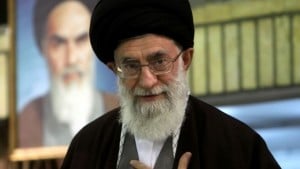
Trump did not only demand Iran’s surrender. He demanded a say in choosing Iran’s next Supreme Leader, calling for the “selection of a GREAT and ACCEPTABLE leader.” Acceptable to whom? To him. A foreign president appointing himself arbiter over the spiritual leadership of a nation of ninety million people — this is the unbroken grammar of colonialism, in which the native is never quite mature enough to govern himself.
Then he turned to the Kurds. Asked how the regime might fall without American boots on the ground, he called a Kurdish offensive into Iran “wonderful”: “I’d be all for it.” He reportedly promised Kurdish leaders “extensive air cover” for an uprising. This is empire’s oldest maneuver: arm a minority against the state you wish to break, then abandon it once its use is exhausted — as Washington has done to the Kurds, by its own historical record, every decade since the 1970s. One does not treat peoples this way. One treats pawns this way.
And then, almost as an aside, he said the part usually left unsaid. Discussing the men his strikes had killed, he told reporters that most of the intended targets were already dead, and that soon, “we’re not going to know anybody.” The casualness is the racism. When the deaths of the Other stop being a tragedy and become a passing joke, the Other has already stopped being counted as human. This is what Malek Bennabi pointed toward with his idea of colonisabilité — not the colonized’s real inferiority, but the colonizer’s settled conviction that he is dealing with matter, not with a people.
And this is where the miscalculation lives. Trump believed that killing Khamenei would collapse the regime, that the war would be folded in “four to five weeks.” He mistook a state for a man. You cannot decapitate a nation the way you remove an executive. Cutting off the head does not dissolve a body woven from a historical solidarity no missile can reach. Iran did not plead. It closed the Strait.
Exhibit Three: One Man, One Airport
One man. One airport. One administrative decision. Yet symbols matter — and this time, the symbol was watched not by armies, but by billions.
Omar Abdulkadir Artan, a Somali referee named the Confederation of African Football’s referee of the year for 2025, was to become the first Somali ever to officiate at a World Cup. He arrived in Miami from Istanbul carrying a valid U.S. visa, issued the week before. He was held for eleven hours, questioned about Somali politics, placed in a holding cell, and put on the next flight out — without ever setting foot on a pitch. The stated reason: “vetting concerns” and an alleged association with suspected members of terrorist organizations. No evidence was produced. A former Somali diplomat noted that Artan had no criminal record and posed no threat to anyone. In Mogadishu, he came home to a hero’s welcome — wrapped in his country’s flag, carried by a crowd that, having no team to celebrate, celebrated one of its own.
Should this surprise anyone? Six months earlier, in a Cabinet meeting broadcast by the White House itself, the same president called Somali immigrants “garbage,” said their country “is no good” and “stinks,” and declared he did not want them in his country. A sitting member of Congress, born in Somalia, was handed the same word. This was not the overreach of one zealous officer at a desk. It was presidential doctrine, spoken at the summit of the state, arriving — mechanically, predictably — at a checkpoint in Miami.
And the thread runs back to Iran, as everything in this story does. Trump had first threatened to bar Iran’s team from the tournament outright, until FIFA objected. The compromise shows up in the numbers: some fifteen Iranian officials were denied entry to the United States, along with Iraq’s official team photographer, while players — including Iraq’s Aymen Hussein — described systematic, invasive searches at the border. Asked to respond, FIFA retreated behind the host country’s sovereign right to control immigration, abandoning Artan, and with him the very principle the tournament claimed to embody.
What the planet watched, then, was not a match. It was the live staging of which bodies are permitted to enter and which are not — regardless of merit, regardless of visa, regardless of talent. The World Cup was meant to narrate the universal. It narrated the border.
Exhibit Four: Who Wrote the Menu
Image: Residents in Tehran on the third day of US-Israeli airstrikes, 3 March 2026 (CC BY 4.0)

Some will say this indictment credits Israel with a power it does not hold. Let the record, not the accusation, make the case.
First: to justify the strikes of February 28, American officials eventually argued that the United States had been “compelled to strike Iran by its Israeli ally.” The admission is enormous — the superpower pleading coercion by its own client.
Second: the Kurdish strategy itself was not born in Washington. According to an official cited by Axios, it was “the general view, and certainly Netanyahu’s view,” that the Kurds would rise. The idea preceded the White House. It came from Jerusalem.
Third, and decisive: Israel declares itself officially “not a party” to the memorandum under negotiation — yet dictated its entire substance. The record of the Trump-Netanyahu call is unambiguous: the Prime Minister “thanks” the President for his “commitment” that any final agreement include the removal of enriched material, the dismantling of enrichment infrastructure, a cap on missiles, and an end to Iranian support for its regional allies. The party “not at the table” wrote the entire menu.
Fourth: whenever the truce threatens to hold, it is Israel that breaks it. At the precise moment talks open in Islamabad, Israeli strikes resume on South Lebanon — reaching Tyre, ordering the evacuation of the city’s Christian quarter, turning back a humanitarian convoy led by a Vatican envoy. Tehran had drawn a red line: continued operations in Lebanon would collapse the truce. Israel crossed it, knowingly.
Four facts. One conclusion. In this war, the superpower supplies the firepower and the story; the client state supplies the objectives and the timing. The vassal relationship has been inverted — and the bill is paid in Lebanese and Iranian blood.
Exhibit Five: The Honest Ledger
An indictment that sees with only one eye is not an indictment. It is propaganda with better manners.
Tehran’s government is no immaculate victim. While the bombs fell, it intensified a repression that began with the January protests: new arrests, seized property, prison sentences — a poet and novelist, Yousef Ansari, convicted in the middle of the war. The theocracy represses its own people. Saying so is a duty, not a concession to the enemy.
But this is precisely what makes Trump’s war unforgivable rather than excusable. By attacking Iran from outside, by arming the Kurds, by calling on Iranians to “clean out” their own regime, he strangled the only opposition that mattered: the opposition from within. Every Iranian dissident is now suspect as a foreign agent. Every demand for freedom collapses into treason. Every Kurd who believed Washington will discover, tomorrow, that he was a tool, not an ally. Bombing does not weaken tyranny. It hands tyranny the one argument that saves it: the enemy is at the gate — be silent. One does not liberate a people by killing its leader and discrediting its sons. One condemns it to choose between two jailers.
Exhibit Six: The Sea That Does Not Obey
The Strait of Hormuz exposed the fraud.
Image: Strait of Hormuz (Public Domain)

A president can announce control. The sea does not obey speeches. Markets do not obey slogans. Insurance companies do not obey social media. The geography of the world is older than the vanity of rulers.
Trump tried everything to reopen it: bombing, a naval blockade, then an escort operation named “Project Freedom.” The result: Iran still holds the strait. Even establishment American analysts describe a war “stumbling from one mistake to the next.” A leaked CIA assessment flatly contradicts the official line of an Iran “on the verge of collapse” — Tehran, it found, can endure the blockade for three or four more months and retains most of its missile arsenal. Meanwhile oil crosses ninety dollars a barrel, tens of thousands of flights are cancelled, and global freight reroutes around the region. Reality, sooner or later, humiliates propaganda — and this time the whole world is presented with the bill, not just the region.
And look at who negotiates the war’s end. Not the UN. Not Europe. Not Washington alone. Pakistan mediates. An “Islamabad memorandum” is said to be “closer than ever,” while Tehran immediately insists it will not be signed “tomorrow.” The center of diplomacy has slipped out of Western hands — and Trump’s own language betrays what he has become. He speaks of a “grand settlement,” a “Transaction” to finalize, billions in frozen funds to release. War as contract. Peace as a deal. The sovereignty of peoples reduced to a line item.
This is the fragmented multipolarity I have described for years: a world in which the hegemon retains the power to destroy but has lost the power to order. It can kill a Supreme Leader but not choose his successor. Bomb a strait but not reopen it. Decree a surrender but not obtain it. Welcome the world to its World Cup, and show it, live, who does not belong. A power that strikes and sorts — with nothing left to ground either act.
This is the age we inhabit.
An age in which the powerful speak of rules while exempting themselves from them.
An age in which international law is invoked against enemies and negotiated around allies.
An age in which sovereignty is sacred in Europe, conditional in the Middle East, suspended in Palestine, violated in Lebanon, punished in Cuba, and rewritten in Iran.
An age in which some children are mourned by name, while others disappear into numbers.
This is not civilization.
It is accounting with corpses.
And those who manufacture disposable peoples always begin by manufacturing moral distance.
They tell us the victim is complicated.
The death is regrettable.
The bombing is defensive.
The siege is necessary.
The occupation is temporary.
The sanctions are targeted.
The massacre is under investigation.
The famine is unfortunate.
The resistance is terrorism.
The ally is defending itself.
The enemy brought it upon himself.
Thus, step by step, conscience is trained to kneel.
But history has a longer memory than power.
The empires that believed themselves eternal are now chapters.
The men who claimed to own the world are now footnotes.
The peoples they tried to erase are still speaking.
The Algerian remembers.
The Palestinian remembers.
The Cuban remembers.
The Lebanese remembers.
The Iranian remembers.
The colonized do not inherit history as an archive.
They inherit it as a wound that learned how to speak.
I write from Algeria because Algeria knows.
It knows the smell of empire.
It knows the grammar of occupation.
It knows the arrogance of those who arrive with guns and dictionaries, killing people while correcting their vocabulary.
And because Algeria knows, it must do more than speak. A year ago, watching the first strikes of June 2025, I called on Algeria to mediate — non-aligned, faithful to its own tradition of mediation, carrying the authority of its own decolonization. That call has only grown more urgent. The lesson of these twelve months is plain: effective mediation will not come again from the discredited center, but from the rising margins. If Pakistan is the one speaking today to both Tehran and Washington, then a place has opened for the powers of the in-between — those with no humiliation to avenge and no client to shield. Algeria is one of these. Its voice, precisely because it carries no troops into this game, can hold what the belligerents have lost: the memory of what a precipice costs, once you have jumped.
That is why this is not merely a political argument.
It is a civilizational warning.
The moment one people becomes disposable, no people remain safe.
The moment one child’s death requires explanation while another child’s death demands mourning, humanity has already been divided.
The moment one state may bomb, starve, sanction, occupy and assassinate in the name of order, while another is denied even the language of sovereignty, law has become costume.
The great question of our century is not whether empires still exist.
They do.
It is not whether powerful states still dominate weaker ones.
They do.
The real question is whether humanity will continue accepting a hierarchy of human worth.
Whether some borders will remain more sacred than others.
Whether some grief will remain more legitimate than others.
Whether some peoples will remain more human than others.
There is one more thing this land has learned the hard way: a year ago, the region stood at the edge of a precipice. The world did not step back. It jumped — and is only now discovering that the precipice had a floor. That floor has a name.
The abyss.
Not to defend every government.
Not to sanctify every resistance.
Not to excuse every crime committed in the name of liberation.
But to defend the oldest principle of political dignity:
No people should have to earn the right to exist.
No people should be bombed into obedience.
No people should be sanctioned into submission.
No people should be erased behind the word “security.”
No people are disposable.
Not Palestinians.
Not Lebanese.
Not Iranians.
Not Cubans.
Not anyone.
Every empire eventually stands before the same tribunal.
Not the tribunal it controls.
Not the court it funds.
Not the institution it intimidates.
The tribunal of history.
There, speeches do not matter.
Press conferences do not matter.
Flags do not matter.
Only the dead testify.
And the dead are never silent forever.
*
Click the share button below to email/forward this article. Follow us on Instagram and X and subscribe to our Telegram Channel. Feel free to repost Global Research articles with proper attribution.
Laala Bechetoula is an independent Algerian historian, journalist, and geopolitical analyst. He has been writing on Trump, American hegemony, and the collapse of the international order since 2025. His work appears in Countercurrents, Global Research, Réseau International, Le Quotidien d’Oran, Sri Lanka Guardian, and other international platforms. This article integrates and crowns a corpus of analytical work produced between November 2025 and April 13, 2026.
He is a Research Associate of the Centre for Research on Globalization (CRG).
Sources for the record (for the long-form / international edition)
The following exhibits rest on reporting that can be independently checked. They are presented here so that the indictment can withstand the scrutiny it invites.
Exhibit One — The Calendar of Contradiction. March 6, 2026: Trump’s “UNCONDITIONAL SURRENDER” / “MAKE IRAN GREAT AGAIN” post (The Hill, Time, Military Times). March 7: claim that Iran “has apologized and surrendered.” March 9: “Death, Fire, and Fury… twenty times harder” threat over Hormuz. The full contradictory sequence is documented together in MS NOW’s “Chaotic and contradictory: Trump’s social media posts expose his incoherent Iran strategy” (May 2026).
Exhibit Two — The Grammar of Empire. The demand for a say in choosing Iran’s “GREAT & ACCEPTABLE Leader(s)” appears in the same March 6 Truth Social post (The Hill). Trump’s “wonderful… I’d be all for it” remark on a Kurdish offensive was reported by Reuters and Al Jazeera (March 5–6, 2026); the promise of “extensive air cover” for Kurdish forces was reported by the Washington Post and The Telegraph the same week.
Exhibit Three — One Man, One Airport. The Omar Artan case — his valid visa, eleven-hour detention, deportation, the “vetting concerns”/“association with suspected members of terror organizations” rationale, and his hero’s welcome in Mogadishu — is documented by NBC News, Al Jazeera, Newsweek and Truthout (all June 2026). Trump’s December 2025 Cabinet-meeting remarks calling Somali immigrants “garbage” and saying their country “stinks” are documented by ABC News, CNN, Fox News, AP/AllAfrica and Global News. The denial of entry to roughly fifteen Iranian officials and Iraq’s team photographer, and the searches of players including Aymen Hussein, are reported by NBC News (June 2026).
Exhibit Four — Who Wrote the Menu. The claim that U.S. officials described themselves as having been pushed toward “preemptive action” by Israel’s own plan to strike — and that the operation was “dictated by Israel’s goals and timeline” — comes from a classified briefing to Congress reported by The Hill (early March 2026), citing Sen. Mark Warner. The account of the Trump–Netanyahu call and Netanyahu’s framing of the memorandum’s contents is drawn from contemporaneous reporting on the February–March 2026 strike planning.
Exhibit Five — The Honest Ledger. The conviction of Yousef Ansari — poet, novelist and Iranian Writers’ Association board member, arrested January 8, 2026, sentenced to four months in prison plus eight months suspended — was reported by RFE/RL (“Tehran’s Crackdown On Political Dissent Continuing Unabated,” June 13, 2026), drawing on the Iranian Writers’ Association’s own announcement.
Exhibit Six — The Sea That Does Not Obey. The leaked CIA assessment contradicting claims of imminent Iranian collapse — finding Iran could endure the naval blockade three to four months and retained roughly 70% of its missile stockpile — was first reported by the Washington Post and covered by Common Dreams (“Leaked CIA Analysis Shows Trump and Hegseth ’Lied Through Their Teeth’ About Iran War,” May 2026). “Project Freedom,” the May 2026 U.S. naval operation to contest the Strait of Hormuz, is documented by CNN, Navy Times and U.S. Central Command statements. The Vatican-organized aid convoy turned back by bombardment near a besieged Christian town in southern Lebanon was reported by Reuters (April 7, 2026); the June 2026 evacuation order and strikes on Tyre, including its Christian quarter, were reported by AFP, AP and Al Arabiya. The Islamabad framework — described by Pakistan’s prime minister and Iran’s foreign minister as “closer than ever,” with Iran cautioning it would not be signed “tomorrow” — is documented by RFE/RL, the Washington Times and Jerusalem Post (June 12–13, 2026).
Featured image: Two boys sit beside a fire in front of vehicles destroyed in a strike in a residential area in Tehran, Iran, on April 9, 2026. The area was struck on March 9. (Photo by Morteza Nikoubazl/NurPhoto)
Global Research is a reader-funded media. We do not accept any funding from corporations or governments. Help us stay afloat. Click the image below to make a one-time or recurring donation.


















.jpg)


 French (CA)