

.png) 4 month_ago
53
4 month_ago
53
NE LAISSER PAS LE 5G DETRUIRE VOTRE ADN Protéger toute votre famille avec les appareils Quantiques Orgo-Life® Publicité par Adpathway

‘Ukrainian genocide on the Polish nation’: commemorating second world war massacres in Volhynia and Eastern Galicia, Warsaw, 11 July 2024
Beata Zawrzel · Nurphoto · Getty
In the name of Polish-Soviet friendship, the postwar communist regimes long preferred to keep quiet about the ethnic cleansing that led to the disappearance of the Polish and Ukrainian minorities living on either side of their shared border. This history resurfaced in the early 1990s, proof that collective memory had preserved traces of the violence. Over the following three decades, the narrative shifted according to the political changes in both countries.
On 3 August 1990, after the collapse of the communist regime in Poland, the new Senate condemned the 1947 Operation Vistula against the Ukrainians. The latter had been expelled from areas along the eastern border and forcibly resettled in the former German territories assigned to Poland after the war (see Poland and Ukraine’s painful shared history, in this issue). The upper chamber recommended that ‘the wrongs caused by this operation be repaired, wherever possible’, and presidential statements would later mark various commemorations. Such was the case with Aleksander Kwaśniewski in 2002, and again with his successor Lech Kaczyński on the 60th anniversary of Operation Vistula in 2007, which led to a joint declaration with his Ukrainian counterpart, Viktor Yushchenko, condemning an act contrary to fundamental human rights, whose responsibility lay with the ‘totalitarian communist regime’.
While some in Ukraine spoke of ethnocide, Polish historian Grzegorz Motyka’s interpretation gained broad consensus: he maintained that Operation Vistula was not ‘necessary’ to neutralise the Ukrainian nationalist guerrilla movement and did not justify the violent expulsion of Ukrainian rural populations from lands they had lived on for centuries.
The issue of the 1943 massacres of Poles in Volhynia emerged later. In the (…)
Full article: 818 words.
This article can be read by subscribers
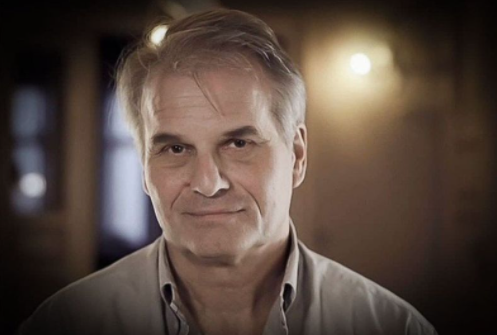
Catherine Gousseff
Catherine Gousseff is a researcher and specialist in 20th-century Soviet and East European history. She is the author of Exchanging Peoples: How borderlands became the Soviet boundary between Ukrainians and Poles (1944-1947), De Gruyter Oldenbourg, Berlin, 2024.
(1) Grezegorz Motyka, From the Volhynian Massacre to Operation Vistula: The Polish-Ukrainian Conflict 1943-1947, Brill/Schöningh, Paderborn, 2022.
(2) Wladyslaw Siemaszko and Ewa Siemaszko, Ludobójstwo dokonane prizes nacjonalistów ukraińskich na ludności polskiej Wolynia 1939-1945, von Borowiecky, Warsaw, 2000.




.jpg)


 French (CA)