

.png) 5 month_ago
25
5 month_ago
25
NE LAISSER PAS LE 5G DETRUIRE VOTRE ADN Protéger toute votre famille avec les appareils Quantiques Orgo-Life® Publicité par Adpathway
How mutual mistrust drives US-Chinese tensions upwards
China’s President Xi says his country’s rise does not mean war with the US is inevitable. But many in Washington and beyond still see great-power rivalry as a path that ends in confrontation.

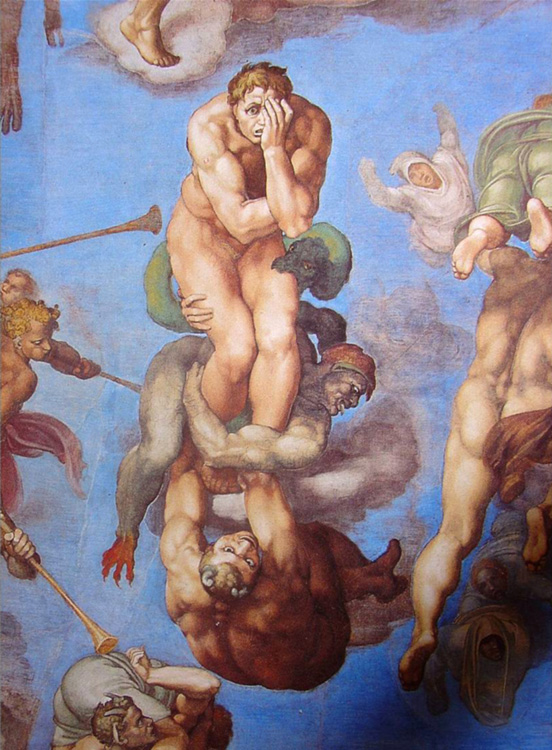
Is war inevitable? Re-enactment of fighting between Athenians and Spartans in the Peloponnesian war (5th century BCE)
De Agostini · Getty
On 30 October 2025 President Donald Trump met his Chinese counterpart Xi Jinping in the South Korean city of Busan, on the sidelines of the Asia-Pacific Economic Cooperation (APEC) summit. Their meeting was the culmination of ministerial talks held in Madrid in September, which opened the door to a de-escalation of the trade war launched by the US president. Described by Trump as ‘an amazing meeting’ (he even rated it 12 out of 10), the Busan talks above all highlighted the limits of Washington’s strategy of weaponising interdependence when faced with a rival that can now compete with the US in this arena.
While both sides backpedalled – the US on the tariffs it had been threatening China with, and Beijing on its readiness to restrict rare-earth exports – it is generally recognised that China came out of the talks on top. As well as the failure of Washington’s abrupt attempt at commercial coercion, the more innovative levers used by the White House since the election of Joe Biden (2021-25) – controls on the semiconductor trade, barriers to investment etc – now appear to be largely ineffective. Rather than hampering China’s growth in key scientific and technological sectors, these measures have, according to the Brookings Institution, ‘helped spur the development of China’s defensive and offensive tech-industrial capabilities’.
The truce is not the end of the story. Nothing has been resolved, and the mutual distrust which has grown since the 2010s still lingers. The Pentagon is encouraging the White House to ‘prioritise defence of the US homeland and … deterring China in the Indo-Pacific’. while China has given up on the idea of a ‘new type of major power relations’ (meaning more harmonious) that it talked about in the early 2010s.
On the eve of the 9 May Victory Day parade in Moscow, Xi compared the current situation to the 1940s. Referring to what he called ‘the righteous forces of the world, including China and the USSR, [which] (…)
Full article: 2 147 words.
This article can be read by subscribers
Philip S Golub
Philip S Golub is professor of international relations at the American University of Paris and the author of East Asia’s Reemergence, Polity Press, Cambridge, 2016.
Translated by Thomas Waterhouse
(9) Xiang Lanxin, ‘China and the international “liberal” (Western) order’, in Trine Flockhart et al (eds), Liberal Order in a Post-Western World, Transatlantic Academy, Washington DC, 2014.
(11) Robert Gilpin, ‘The theory of hegemonic war’, The Journal of Interdisciplinary History, vol 18, no 4, MIT Press, Boston, spring 1988.
(13) Graham Allison, Destined for War: Can America and China Escape Thucydides’s Trap?, Houghton Mifflin Harcourt, Boston/New York, 2017.





















.jpg)


 French (CA)