

.png) 1 month_ago
26
1 month_ago
26
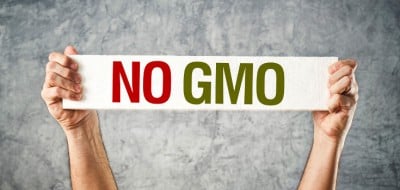
New reports from Friends of the Earth and Sustainable Pulse have drawn attention to the increasing concerns relating to higher risks of GM crops following the approval of GMO wheat in the USA. While hundreds of scientists and research papers have confirmed the many-sided high risks of GM crops for farming, health and environment, there has been some relief that at least some of the major food crops most widely consumed by human beings have been free so far from GM technology.
To read this article in the following languages, click the Translate Website button below the author’s name.
Farsi, عربي, Hebrew, Русский, Español, Portugues, 中文, Français, Deutsch, Italiano, 日本語, 한국어, Türkçe, Српски. And 40 more languages.
In countries like India and neighbouring countries of South Asia where wheat and rice are the most favoured and staple food crops, it is of particular concern to keep these crops away from GM technology. Hence U.S. government’s recent approval of HB4 genetically modified (GMO) wheat is causing particular concern in South Asia as well as in most other countries. This concern is not just due to the overall high risks of GM crops, it is also due to the more specific warnings that GM wheat in particular can pose serious risks to public health, environment and farmers’ livelihoods, while offering no proven benefit. As the USA is known to be increasingly aggressive in promoting not only its farm exports, but in addition also GM technology as a part of its promotion of packages that suit US agro-business interests, there is increasing worry regarding future perils.
With the approval of HB4 consumers of USA and ultimately of several other countries face the prospects of herbicide-tolerant wheat entering the food system. Of course this is only the approval stage and it is not currently being grown commercially in the U.S. However the process of its potential spread has started. Friends of the Earth is calling on companies and consumers to reject HB4 GMO.
According to the documents of Friends of the Earth and Sustainable Pulse HB4 wheat is engineered to tolerate the toxic herbicide glufosinate ammonium. Glufosinate is banned in the European Union because it poses risks to human health. It is also linked to negative impacts on soil and ecosystem health.
“GMO wheat poses high risks with no clear benefits. It threatens farmers, consumers, and ecosystems,” said Dana Perls, senior program manager at Friends of the Earth. “Companies and consumers should reject genetically engineered wheat and support proven, sustainable solutions. Organic farming and traditional breeding protect climate, biodiversity, and food security — without toxic trade-offs.”
These documents say that HB4 wheat would extend the failed, toxic system of some other GM crops to a global staple food — deepening chemical dependence, increasing costs for farmers, and compounding environmental damage.
These reports say that
“even limited commercialization of HB4 could trigger trade disruptions or contamination of non-GMO wheat supplies… Even farmers who don’t plant HB4 could suffer, as genetic contamination and supply-chain mixing could jeopardize all U.S. wheat exports. Meanwhile, GMO seeds undermine farmers’ economic sovereignty by locking them into restrictive contracts with powerful seed and chemical corporations.”
These reports say that
“research links glufosinate to premature birth, miscarriage, stillbirth, skeletal birth defects, and autism-like behaviors in offspring.”
According to EPA assessments, glufosinate is much more toxic than the herbicide glyphosate in terms of long-term exposure. Because glufosinate can be sprayed directly on HB4 wheat, the approval of HB4 could increase residues of the toxic herbicide in food such as breads, pastas, and cereals. Pregnant people and children are the most vulnerable populations. In addition, these documents say, glufosinate is harmful to soil organisms, pollinators, and aquatic life, threatening biodiversity and long-term farm resilience. The chemical also increases the risk of soil and water pollution.
These reports say that despite being promoted as a climate solution, HB4 wheat lacks independent evidence demonstrating superior performance under drought conditions. Analyses of available data suggest it may actually yield less than conventional wheat, even in dry years.
As GMO wheat is in its early stage, these concerns should be widely noted and carefully examined at this early stage in all concerned countries so that costly mistakes can be avoided. As is well-known, the technology is such that once costly mistakes have been made, it is almost impossible to undo all the damage. Hence the greatest caution should be exercised in this matter. In fact in the interests of environment and health, in the interests of protecting the livelihoods of farmers as well as sovereignty of small farmer systems, it is important to resist and oppose such harmful technologies with firmness and unity.
I have travelled to many villages in India and spoken to hundreds of farmers (including wheat farmers) who are engaged in evolving climate resilient farming and ecologically protective farming without using any hazardous technologies and in fact steadily reducing their dependence on hazardous chemicals. They are moving towards natural farming, and at the same time they are able to maintain and sometimes even improve yields, while definitely producing healthier food for their families as well as for others. Women farmers are in the frontlines of such efforts. When such safe alternatives are available, there is absolutely no need to opt for high risk, high hazards technologies like GM crops, whether for wheat or for any other crop.
Before concluding, let us hear what India’s top scientist on this subject, the late Prof Pushpa M. Bhargava, who was also the founder of the Centre for Cellular and Molecular Biology and was also selected to advice the Supreme Court of India on this subject, stated about GM Crops after considering all the available evidence,
“There are over 500 research publications by scientists of indisputable integrity who have no conflict of interest, that establish harmful effects of GM crops on human, animal and plant health and on environment and biodiversity…On the other hand, virtually every paper supporting GM crops is by scientists who have a declared conflict of interest or whose credibility and integrity can be doubted.”
*
Click the share button below to email/forward this article. Follow us on Instagram and X and subscribe to our Telegram Channel. Feel free to repost Global Research articles with proper attribution.
Bharat Dogra is Honorary Convener, Campaign to Save Earth Now. His recent books include India’s Quest for Sustainable Farming and Healthy Food, 14 questions on GM Crops, Protecting Earth for Children and Man over Machine—The Path of Gandhi. He is a regular contributor to Global Research.
Global Research is a reader-funded media. We do not accept any funding from corporations or governments. Help us stay afloat. Click the image below to make a one-time or recurring donation.

















.jpg)


 French (CA)